Sculptra Injection in Lodi, NJ
Rebuild Volume That Looks Like You Never Lost It
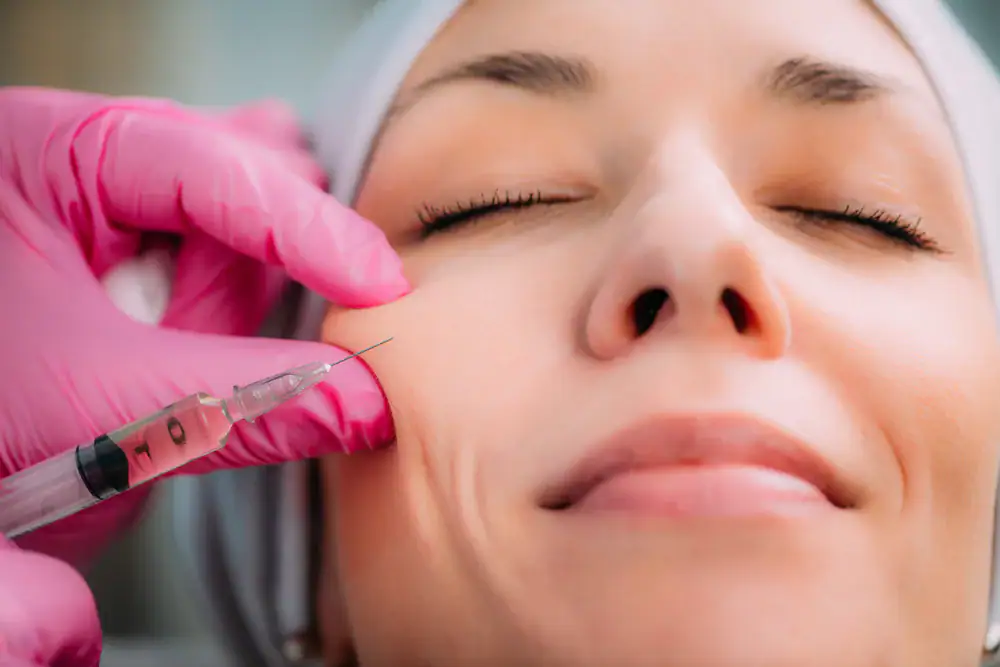

Sculptra Treatment in Lodi, NJ
You’re not looking for a different face. You want the one you had before hollowing set in around your temples, cheeks, and jawline.
Sculptra filler in Lodi, NJ works differently than hyaluronic acid fillers because it doesn’t just fill space—it triggers your skin to rebuild its own collagen over time. That means the volume you see at month three isn’t sitting on top of your face. It’s coming from within.
Clinical data shows 94% of patients still see results two years after treatment. That’s not marketing language—that’s what happens when you stimulate collagen production instead of just injecting temporary volume. Your face doesn’t deflate after a few months because the structure was rebuilt, not rented.
The process takes patience. You’ll need a series of sessions spaced weeks apart, and full results develop over four to six weeks after your final treatment. But once they’re there, they stay. And they move with your expressions because the collagen is yours.
Board-Certified Sculptra Provider in Lodi, NJ
Sculptra collagen building requires a different skill set than standard filler work. Depth, dilution, massage technique—these aren’t minor details. They determine whether you get smooth, even results or lumps that form weeks later.
House of Ness is led by a Board Certified Plastic Surgeon, and every injector on our staff is certified and licensed. We’re a platinum-level Allergan partner, which means we meet strict standards for training, volume, and patient outcomes. That’s not a badge—it’s accountability.
Lodi, NJ sits in Bergen County, where med spa options aren’t hard to find. What’s harder to find is a provider who treats Sculptra skin tightening as a medical procedure, not a quick cosmetic add-on. You’ll get a complimentary consultation before any needle touches your face, and a two-week follow-up with a touch-up if needed—at no extra cost.
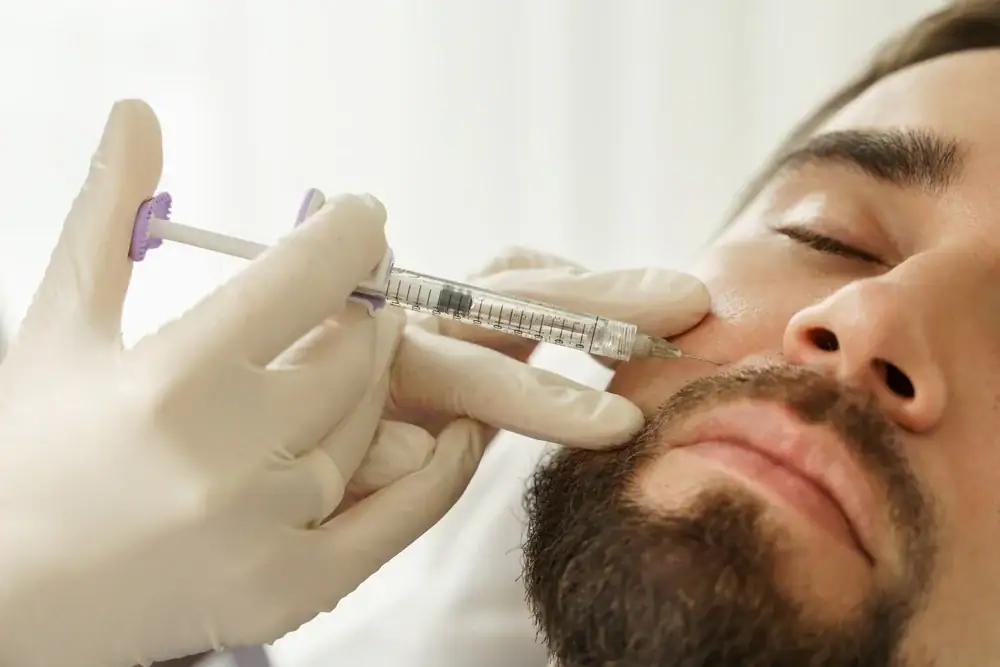
How Sculptra Collagen Boost Works
Sculptra injection in Lodi, NJ starts with a consultation where we assess your facial structure and volume loss patterns. Not everyone needs the same number of vials or the same injection sites. Some people have significant temple hollowing. Others lose volume along the jawline or in the mid-face first.
During the treatment, we inject poly-L-lactic acid (PLLA)—the same biocompatible material used in dissolvable stitches—into targeted areas beneath your skin. It doesn’t fill the space immediately. Instead, it triggers an inflammatory response that tells your body to produce new collagen in those areas.
You’ll likely need two to three sessions spaced about four weeks apart. After each session, you’ll massage the treated areas for five days to distribute the product evenly and reduce the risk of nodules. This isn’t optional—it’s part of the protocol.
Results build gradually. You won’t walk out looking different, and that’s the point. Over the next several weeks, your skin thickens, volume returns, and the hollowed areas start to fill in naturally. By month three, you’ll see the full effect. And because it’s your own collagen, it lasts—up to two years in most cases.
Ready to get started?
Sculptra Treatment Areas in Lodi, NJ
Sculptra collagen stimulation is FDA-approved for treating shallow to deep nasolabial folds and other facial wrinkles. But in practice, it’s used across multiple areas where volume loss creates an aged or tired appearance.
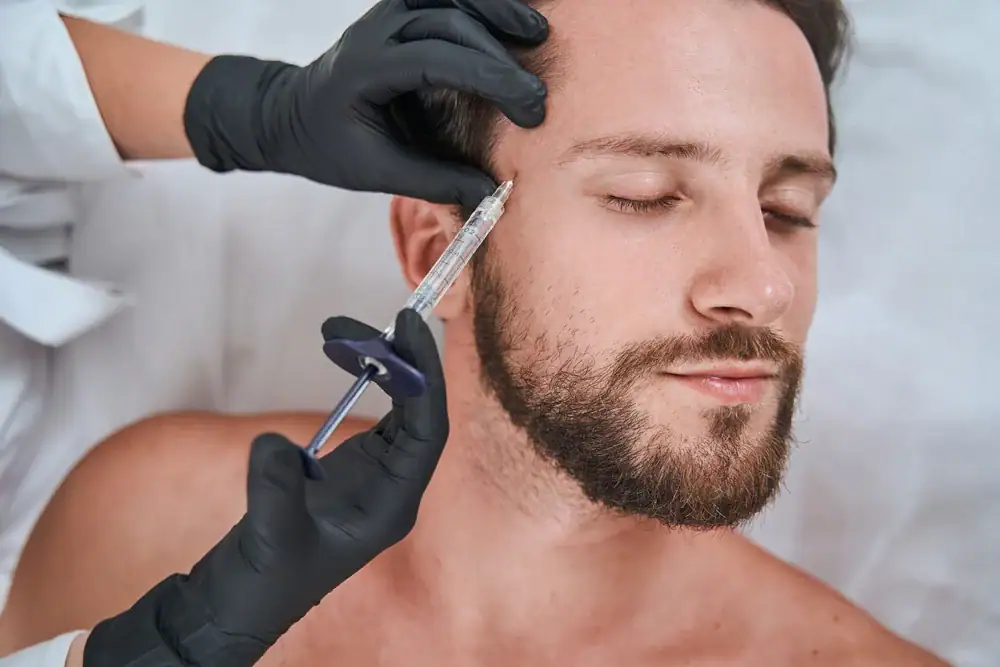
Cheeks are one of the most common treatment zones. When mid-face volume drops, you lose that lifted, youthful contour. Sculptra rebuilds the underlying support so your cheeks look fuller without looking puffy. Temples are another high-impact area—hollowing here creates a gaunt look that ages your entire face.
Jawline and chin treatments help restore definition that’s been lost to sagging or thinning skin. Marionette lines—the folds that run from the corners of your mouth down to your chin—also respond well to Sculptra because the collagen boost improves skin texture and thickness in those areas.
In Lodi, NJ and across Bergen County, we’re seeing more patients combine Sculptra with other treatments for comprehensive facial rejuvenation. Some pair it with Botox to address dynamic wrinkles. Others use it alongside medical-grade skincare to protect and extend their results. The goal isn’t to do everything—it’s to do what actually works for your face.
How long does it take to see results from Sculptra injection?
You won’t see immediate results from Sculptra treatment in Lodi, NJ because it’s not a filler that adds instant volume. It’s a collagen stimulator, which means it works over time by triggering your body’s natural collagen production.
Most patients start noticing subtle changes around four to six weeks after their first session. But full results typically develop over three to four months, after you’ve completed your series of treatments. The timeline depends on how many sessions you need and how your body responds to the poly-L-lactic acid.
This gradual approach is actually one of Sculptra’s biggest advantages. Your face doesn’t change overnight, so friends and coworkers won’t notice you “had something done.” They’ll just think you look rested or healthier. The collagen builds slowly, which gives you natural-looking volume that moves and feels like your own tissue—because it is.
Is Sculptra better than hyaluronic acid fillers like Juvederm or Restylane?
Sculptra filler in Lodi, NJ isn’t better or worse than hyaluronic acid fillers—it’s different, and the right choice depends on what you’re trying to fix. Hyaluronic acid fillers like Juvederm and Restylane add immediate volume by physically filling space under your skin. They’re great for targeted areas like lips or deep folds, and you see results right away.
Sculptra doesn’t fill—it stimulates. It triggers collagen production, which means the volume you gain is your own tissue rebuilding over time. That takes longer to develop, but it also lasts longer. Hyaluronic acid fillers typically last six to eighteen months. Sculptra can last up to two years, and in some cases longer, because you’re not relying on a gel that eventually breaks down.
If you want immediate correction for a specific area, hyaluronic acid makes sense. If you’re dealing with overall volume loss across multiple areas and want results that last, Sculptra is often the better investment. Some patients use both—Sculptra for foundational volume and hyaluronic acid for fine-tuning specific features.
What are the side effects of Sculptra injection?
Common side effects from Sculptra injection in Lodi, NJ are mild and temporary. You’ll likely have swelling, redness, bruising, or tenderness at the injection sites for a few days. Some people also experience small bumps under the skin right after treatment, but these usually resolve within a few weeks with proper massage.
The more serious risk—though rare—is nodule formation. These are small lumps that can develop under the skin weeks or even months after treatment if the product isn’t distributed evenly or if it’s injected too superficially. That’s why provider experience matters. A trained injector knows the correct depth, dilution, and technique to minimize this risk.
You’ll also be instructed to massage the treated areas for five minutes, five times a day, for five days after each session. This isn’t optional. It helps distribute the Sculptra evenly and significantly reduces the chance of lumps forming. If you’re not willing to commit to that aftercare, Sculptra probably isn’t the right treatment for you. The results are worth it, but only if the process is done correctly from start to finish.
How much does Sculptra treatment cost in Lodi, NJ?
Sculptra is priced per vial, and most patients need two to three vials per session, with two to three sessions total. In Lodi, NJ and the surrounding Bergen County area, you can expect to pay between $800 and $1,200 per vial depending on the provider’s experience and credentials.
Board-certified providers typically charge more—not because of overhead, but because of training, precision, and outcomes. A plastic surgeon or highly trained injector understands facial anatomy at a deeper level, which directly affects your results and safety. Sculptra collagen boost isn’t a treatment you want to bargain-shop for.
At House of Ness, we offer transparent pricing during your complimentary consultation. We’ll assess how many vials you need based on your specific volume loss, not a one-size-fits-all protocol. We also participate in the Allē rewards program, which lets you earn points on Allergan products and apply them toward future treatments. If you’re a new client, military member, nurse, or first responder, we offer additional discounts. The goal is to make high-quality care accessible without cutting corners on safety or results.
Can Sculptra be used under the eyes for hollowing?
Sculptra is not FDA-approved for under-eye use, and most experienced injectors avoid treating that area with it. The skin under your eyes is extremely thin, and Sculptra works by creating a controlled inflammatory response to stimulate collagen. In delicate areas, that can lead to visible lumps or irregularities that are difficult to correct.
For under-eye hollowing, hyaluronic acid fillers like Restylane or Belotero are usually a safer choice. They’re designed for superficial injection, they’re reversible if something goes wrong, and they don’t carry the same risk of delayed nodule formation.
That said, Sculptra treatment in Lodi, NJ can address volume loss in the cheeks and temples, which indirectly improves the appearance of under-eye hollowing. When you restore mid-face volume, it lifts and supports the entire area, reducing the shadowing and sunken look that makes under-eye bags more noticeable. A skilled injector will assess your face as a whole and recommend the right combination of treatments to get you the result you’re after—not just the treatment you think you need.
How long do Sculptra results actually last?
Clinical studies show that Sculptra results last up to two years for most patients, with 94% maintaining visible improvement at the two-year mark. Some people see results that last even longer, especially if they maintain their skin health with good skincare and sun protection.
The reason Sculptra lasts longer than traditional fillers is because you’re not injecting a substance that your body gradually absorbs. You’re stimulating your own collagen production. Once that collagen is built, it behaves like the rest of your tissue. It doesn’t just disappear after a few months.
That said, your body will continue to age. Collagen production naturally declines over time, and factors like sun exposure, smoking, and genetics all play a role in how long your results hold. Many patients return for a maintenance session every 18 to 24 months to keep their results looking fresh. But compared to hyaluronic acid fillers that require touch-ups every six to twelve months, Sculptra offers significantly more longevity—and often better value over time.
Other Services we provide in Lodi