Laser Resurfacing Aftercare: The Complete Recovery Timeline Day by Day
Laser resurfacing recovery isn't a mystery — once you know what to expect at each stage, the whole process gets a lot less stressful.
Share:

Summary:
Here’s the thing nobody tells you clearly enough before you book laser resurfacing: the treatment itself is the easy part. Thirty to forty-five minutes in the chair, and then you go home. What happens next — the healing, the peeling, the waiting — that’s where most people feel lost.
If you’re in New York or New Jersey and you’re either preparing for laser resurfacing or already in recovery and searching for answers, you’re in the right place. This guide covers what your skin will actually look and feel like at each stage, what to put on it, what to leave alone, and when you’ll finally see the results you came for.
What Happens to Your Skin Immediately After Laser Resurfacing
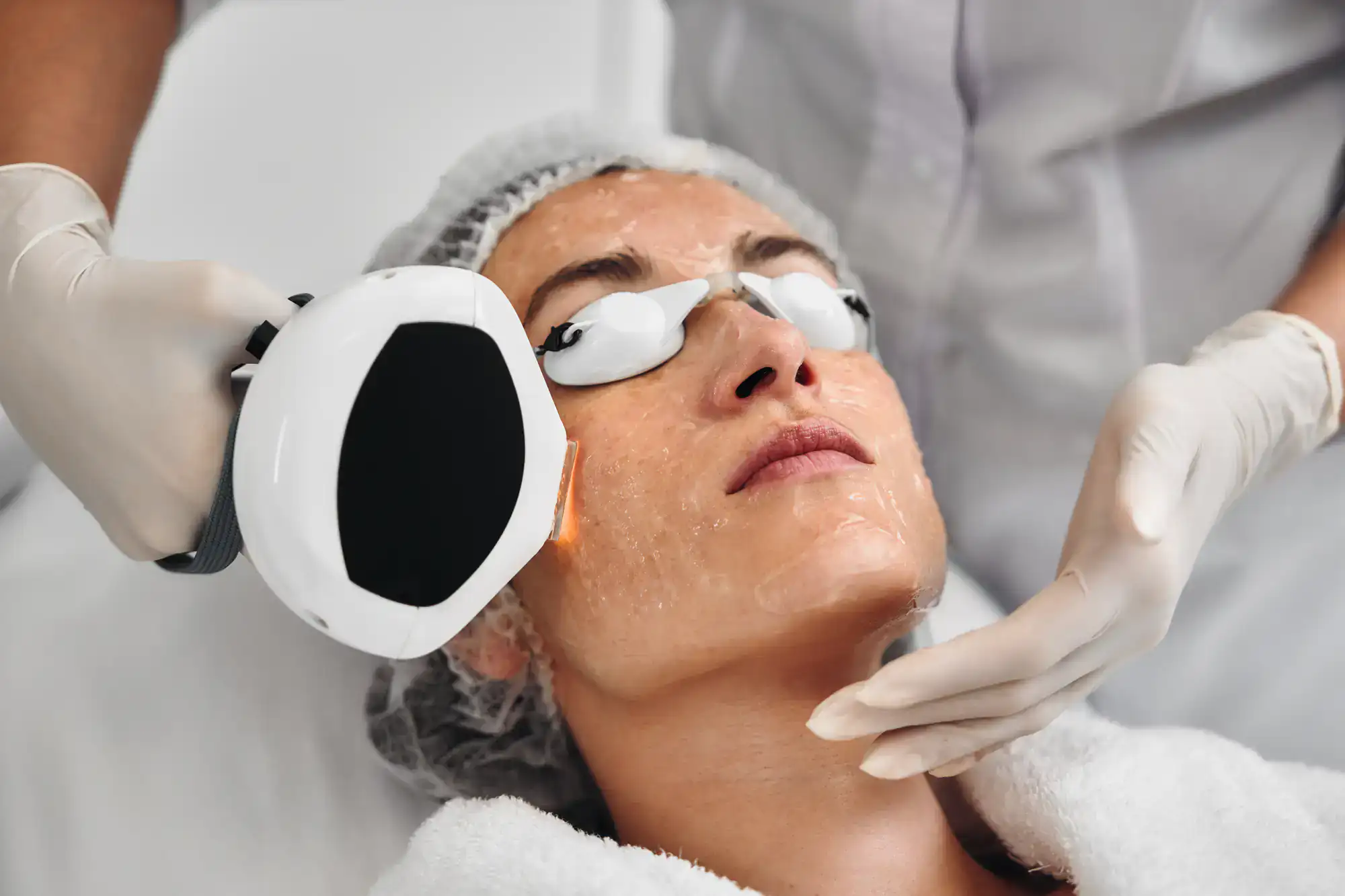
The moment your treatment ends, your skin begins a carefully orchestrated healing response. You’ll likely leave the office looking sunburned — red, warm, and a little swollen. That’s not a bad sign. That’s the inflammatory phase beginning, and it’s exactly what needs to happen for your skin to rebuild.
What the laser actually did was create controlled thermal injury to the skin’s surface and deeper dermal layers. That triggers your body’s wound-healing cascade, which reorganizes your collagen matrix and eventually produces firmer, smoother, more even skin. The redness and heat you feel in those first hours are your immune system showing up to do its job.
Days One Through Seven: What to Expect in the First Week
Recovery looks different depending on which type of laser you had — and this is where a lot of the confusion comes from, because most guides treat all laser resurfacing as the same experience. It isn’t.
If you had a non-ablative treatment, you’re looking at one to three days of mild redness and sensitivity, and then you’re largely back to normal. It’s the gentlest option, and the tradeoff is that you’ll typically need more sessions to achieve the same level of correction.
Erbium laser resurfacing sits in the middle. Expect about a week of healing — some peeling, some redness, less swelling than CO2 — with crusting that usually resolves within three to four days. Most people find this manageable with good aftercare and some flexibility in their schedule.
Fractional CO2 is more aggressive. Days one through three bring significant redness, swelling, and warmth. By days two and three, crusting and peeling begin — this happens in essentially 100% of ablative treatments, so if you see it, that’s not a complication, that’s the process. The peeling phase runs roughly three to eight days for CO2, and the skin that emerges underneath will be pink and sensitive but noticeably fresher.
The most important thing you can do during this phase is leave the skin alone. Don’t pick, don’t peel, don’t try to speed it up. Removing peeling skin manually disrupts the healing process and can cause scarring. Keep the area clean, keep it moist with whatever medical-grade products we send you home with, and let the biology do its work.
We recommend saline compresses every few hours during the first 48 to 72 hours to draw out heat and ease discomfort — a simple, effective way to stay comfortable without interfering with healing. Avoid hot showers, saunas, intense exercise, and anything that raises your core temperature during this window. Wash your hands before touching your face every single time.
By the end of week one, the most intense phase is behind you. The skin will still be pink and sensitive, but the peeling will have largely resolved, and you’ll start to see the first glimpse of what’s underneath.
Weeks Two Through Eight: The Part of Recovery Nobody Talks About
Most aftercare guides cover the first week in detail and then jump straight to “final results at three to six months.” What they skip is the middle stretch — weeks two through eight — and that gap is exactly where patients start to doubt their treatment.
At the two-week mark, you’ll likely see real improvement. The redness has calmed significantly, the peeling is done, and the skin looks smoother and more even. This is also when your two-week follow-up appointment matters most. At House of Ness, that appointment is built into every laser treatment — not an optional add-on, not something you have to request. It’s scheduled from the start because this is when we need to assess how your skin is healing, address anything unexpected, and confirm you’re on track.
Between weeks two and eight, the skin continues to refine. You may still notice some pinkness, especially if you had an ablative treatment. The texture keeps improving gradually. Some patients feel like nothing is happening during this phase because the changes are subtle week to week — but collagen remodeling doesn’t announce itself. It’s happening beneath the surface, reorganizing the structural proteins that give your skin its firmness and elasticity.
Collagen Types I and III — which account for roughly 80 to 85 percent and 10 to 15 percent of total skin collagen respectively — are both being stimulated and reorganized during this period. That process, once triggered by laser resurfacing, can continue for up to 12 months. Which means the skin you see at week four is not your final result. Not even close.
This is also the phase where your skincare routine matters enormously. Gentle cleansing, a good barrier moisturizer, and consistent broad-spectrum sun protection are non-negotiable. Retinol, AHAs, BHAs, and vitamin C stay off the table until we clear them — typically two to four weeks post-treatment for non-ablative, and longer for ablative procedures. Reintroducing actives too early is one of the most common ways patients compromise results they’ve already paid for.
Want live answers?
Connect with a House of Ness expert for fast, friendly support.
Post-Laser Skincare and Sun Protection: What to Use and What to Avoid
Your skincare routine after laser resurfacing is not the time to experiment. The skin barrier is compromised — even after visible peeling ends — and what you apply during this window directly affects how well you heal and how long your results last.
In the first few days, less is more. A gentle, fragrance-free cleanser and an occlusive barrier moisturizer are your primary tools. Medical-grade products formulated for post-procedure skin are worth the specificity — they’re designed to support healing without introducing irritants that a compromised barrier can’t handle. Peptides are particularly useful in the early recovery phase for supporting the skin’s repair process.
Sun Protection After Laser Resurfacing: Critical for New York and New Jersey Patients
Sun protection after laser resurfacing isn’t a suggestion — it’s the single most important thing you can do to protect your results. Post-laser skin is highly UV-sensitive, and unprotected exposure during the healing phase can cause post-inflammatory hyperpigmentation (PIH), which is both difficult to treat and entirely preventable.
We recommend limiting sun exposure for at least six weeks after treatment and using a broad-spectrum sunscreen with SPF 30 or higher every single day — regardless of whether it’s sunny. UV radiation penetrates cloud cover. On a grey January morning in Bergen County, your healing skin is still at risk if you step outside unprotected.
This matters especially for New York and New Jersey patients. The outdoor lifestyle here is real. Bergen County residents who hike the Ramapo Mountains, spend summer weekends at the Jersey Shore, or commute across the George Washington Bridge are getting meaningful UV exposure. Staten Island’s coastal geography — the harbor, the Kill Van Kull, the open waterfront — adds reflected UV from the water that many people don’t account for. Even the daily commute on the Staten Island Ferry puts your face in direct sun for the duration of the crossing.
Look for sunscreens with zinc oxide or titanium dioxide as the active ingredients — these are physical blockers that sit on top of the skin rather than being absorbed, which makes them gentler on healing skin. Pair that with a wide-brimmed hat when you’re outside, and you’ve covered the two most important bases.
For patients with Fitzpatrick III through V skin tones — a significant portion of the population in Bergen County communities like Fort Lee, Palisades Park, and Leonia — the PIH risk is higher, and sun protection is even more critical. We discuss this in detail during the pre-treatment consultation and revisit it at the two-week follow-up, because the right aftercare protocol varies by skin type, not just by laser type.
One more thing worth saying clearly: SPF is not something you use until the redness fades and then put away. It becomes a permanent part of your routine if you want your results to last. The collagen remodeling that laser resurfacing triggers takes up to 12 months to complete — and UV exposure during that entire window can undermine the process.
When Can You Wear Makeup, Go Back to Work, and Return to Normal Life?
These are the questions patients ask most often, and they deserve specific answers rather than vague reassurances.
Makeup should stay off for at least the first 48 hours after any laser treatment. After that initial window, if your skin has begun to heal without complication, mineral makeup — formulated without fragrances, dyes, or irritating actives — is generally tolerable. Full foundation over actively peeling skin is a different matter. It traps bacteria, can pull at the healing surface, and introduces ingredients that a compromised barrier can’t handle. When in doubt, wait and ask us at the two-week follow-up.
Return to work depends almost entirely on which laser you had and what your job looks like. Non-ablative patients can often return to a desk job within one to three days, with some residual pinkness that can be covered with mineral makeup if needed. Erbium patients are typically looking at five to seven days before they feel comfortable in public. CO2 patients should plan for a full week at minimum, and for some, ten days is more realistic before they feel ready to be seen. If your work involves significant outdoor time or physical activity, add buffer.
Exercise and intense physical activity should be paused for at least the first week. Elevated heart rate and body heat increase swelling and can compromise healing. Light walking is generally fine after a few days, but hold off on anything strenuous until we give the green light.
Hot showers, steam rooms, and saunas are off the table during the active healing phase. The heat increases inflammation and swelling at a time when your skin is already working hard to repair itself.
Fall and winter are genuinely the best time to do this in New York and New Jersey. The UV index drops, you’re naturally spending more time indoors, and you can complete the most sensitive phase of recovery before summer outdoor season begins. Booking a treatment in October or November positions you for full collagen remodeling results by the time the weather turns warm again.
How Long Does Laser Resurfacing Take to Show Full Results?
The short answer is three to six months for full results — and up to twelve months for the collagen remodeling process to complete entirely. Initial improvement is visible within two weeks. The skin keeps refining from there, gradually and quietly, in ways that become obvious when you compare photos from month one to month four.
What you do during that entire window matters. Consistent sun protection, a gentle and appropriate skincare routine, and staying connected with us through the recovery process are what separate patients who are thrilled with their results from those who feel like the treatment underperformed.
If you’re in New York or New Jersey and you’re considering laser resurfacing — or you’re already in recovery and want to make sure you’re on the right track — reach out to House of Ness. The consultation is complimentary, there’s no pressure, and the follow-up is already built in.
Article details:
- Published by:
- House of Ness
- Published to:
- Last modified:
- July 23, 2026
Share:
Continue learning: