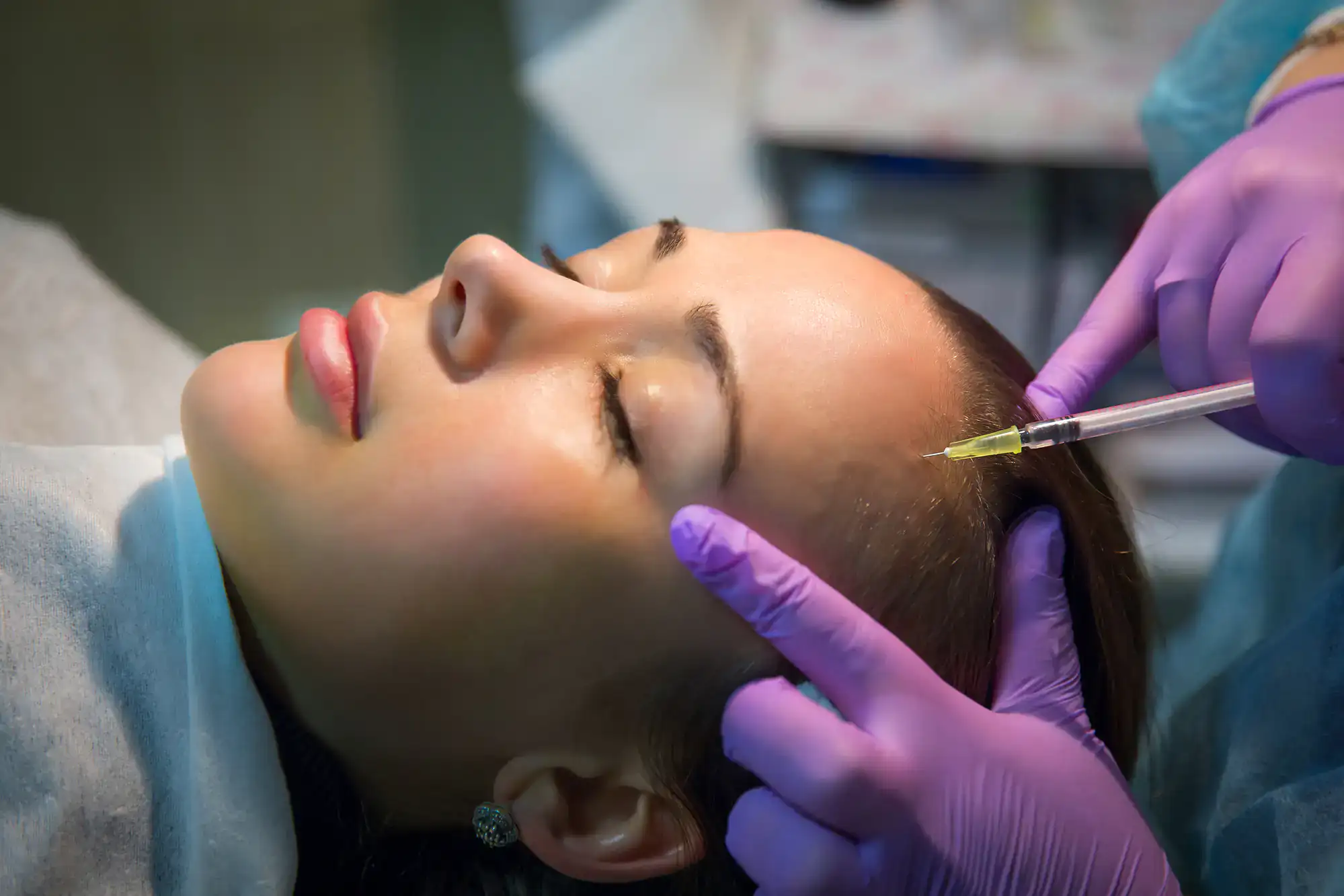
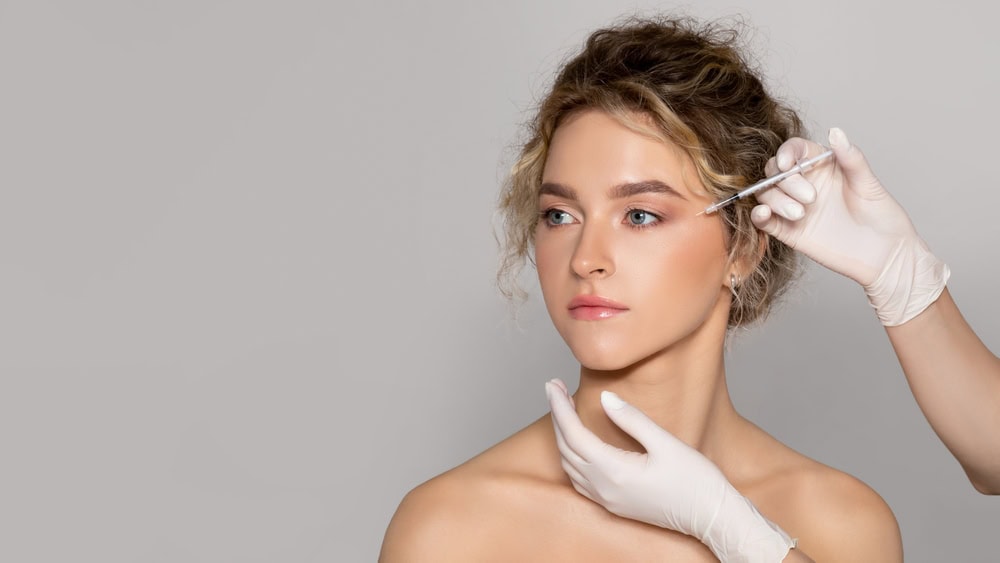
Botox Injection 101: How to Achieve Natural, Refreshed Results in Manhattan, Staten Island & Paramus (Without Looking “Frozen”)
Thinking about Botox but worried about looking overdone? Here's what actually separates natural results from the frozen ones you want to avoid.
Share:
Summary:
You’ve thought about it. Maybe for a while. You’ve seen the results you want — subtle, refreshed, like you slept well and drank enough water — and you’ve also seen the results you don’t want. The ones that make people look surprised all the time. The ones that make you think, “I’d rather have the wrinkles.”
Here’s the thing: those two outcomes aren’t a coin flip. They’re the direct result of who’s holding the syringe. Botox itself doesn’t freeze faces. Undertrained injectors with no sense of restraint do.
This guide covers how Botox works, what to realistically expect, and what separates a result you’ll love from one you’ll be waiting to wear off.
How Botox Injection Actually Works — and Why Results Vary So Much
Botox is a purified form of botulinum toxin that temporarily relaxes the specific muscles responsible for dynamic wrinkles — the lines that form when you squint, frown, or raise your eyebrows. It doesn’t fill anything. It doesn’t change your bone structure. It simply tells certain muscles to take a break, which smooths the skin above them.
Results typically start showing within three to seven days and reach their full effect around the two-week mark. From there, most people maintain results for three to four months before the muscle activity gradually returns and a follow-up treatment makes sense.
Where things go sideways is dosage and placement. Too much product in the wrong location and you lose the ability to move your face naturally. The right amount, placed precisely where it belongs, and you look like yourself — just more rested.
What Areas Can Botox Treat — and Which Results Look the Most Natural
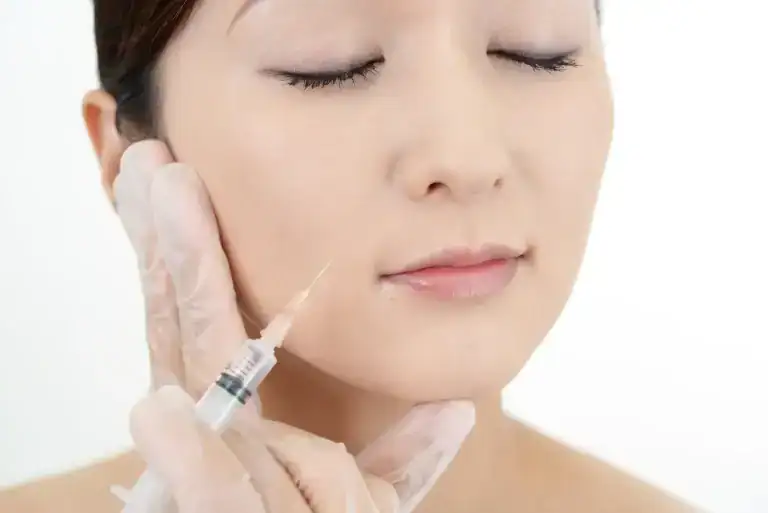
The most common treatment areas are the forehead, the lines between the brows (often called the “11s” or glabellar lines), and crow’s feet around the eyes. These are the areas where repeated muscle movement over years creates visible creasing, and they respond predictably well to Botox when the dosage is dialed in correctly.
Beyond those three, there are treatments that fewer people know about but that can make a meaningful difference. Masseter Botox — injected into the jaw muscle — is used for jaw slimming, TMJ relief, and teeth grinding. It’s one of the more transformative treatments available because it subtly reshapes the lower face without touching a single filler. Neck Botox, sometimes called the Nefertiti lift, addresses the vertical bands that become more visible with age and can give the neck a cleaner, more lifted appearance.
What makes results look natural in all of these areas comes down to one principle: the goal is to relax the right muscles, not eliminate all movement. A forehead that can’t move at all reads as treated immediately. A forehead that moves a little less — that softens without freezing — reads as rested. That distinction requires an injector who understands facial anatomy deeply, not just where to put the needle, but how much to use and what to leave alone.
The “baby Botox” approach, which uses smaller doses distributed across more points, has become increasingly popular for exactly this reason. It’s especially common among clients in their late 20s and 30s who are using Botox preventatively — not to correct existing lines, but to slow the process of forming them in the first place. Among clients aged 19 to 34, Botox use has grown by more than 70% in recent years. It’s no longer just a 40s-and-up conversation.
Botox vs. Dermal Fillers — Understanding Which One You Actually Need
This is probably the most common point of confusion for anyone new to injectables, and it’s worth clearing up plainly. Botox and dermal fillers are not interchangeable. They work differently, treat different concerns, and are often used together — but one cannot substitute for the other.
Botox relaxes muscles. That’s its entire mechanism. It works on dynamic wrinkles — the ones caused by movement. If a line only appears when you make a facial expression, Botox is likely the right tool.
Dermal fillers restore volume. They’re typically made from hyaluronic acid, a substance your body already produces, and they physically fill areas that have lost fullness over time. Hollowed cheeks, thinning lips, deeper nasolabial folds that exist even when your face is completely at rest — these are filler conversations, not Botox ones.
The reason people get confused is that the end goal looks similar: a face that appears more youthful and refreshed. But the path to that outcome depends entirely on what’s causing the concern in the first place. Someone who thinks they need filler for their forehead lines probably needs Botox. Someone who thinks Botox will restore volume to their cheeks is going to be disappointed.
A good injector will look at your face, understand what’s actually happening structurally, and tell you honestly what will and won’t work. That conversation — the one where someone maps out your face and explains their reasoning — is exactly what a thorough consultation should include. If a provider skips that step and goes straight to recommending product, that’s worth noticing.
Laser facials are another tool that often comes up in these conversations, particularly for clients dealing with skin texture, sun damage, or acne scarring. While Botox and fillers address structure and movement, a laser facial works on the surface — improving tone, reducing discoloration, and refining texture in ways that injectables simply can’t. Many clients find that combining injectables with a laser treatment gives them a more complete result than either approach alone.
Want live answers?
Connect with a House of Ness expert for fast, friendly support.
What to Look for in a Botox Provider Before You Book
In 2024, the CDC reported hospitalizations in nine states from counterfeit botulinum toxin injected by unlicensed providers. Some cases required antitoxin treatment. That’s the extreme end of what happens when the wrong person is administering Botox — but the more common version is subtler: uneven results, product that wears off in six weeks, or an overdone look that takes months to resolve.
The difference between a great outcome and a frustrating one almost always comes back to who performed it and what product they used. Credentials, authentic product, and follow-up care aren’t marketing language. They’re the actual variables that determine your result.
In both New York and New Jersey, Botox is legally classified as a medical procedure. It can only be administered by licensed medical professionals under physician supervision. That’s the floor — not the ceiling.
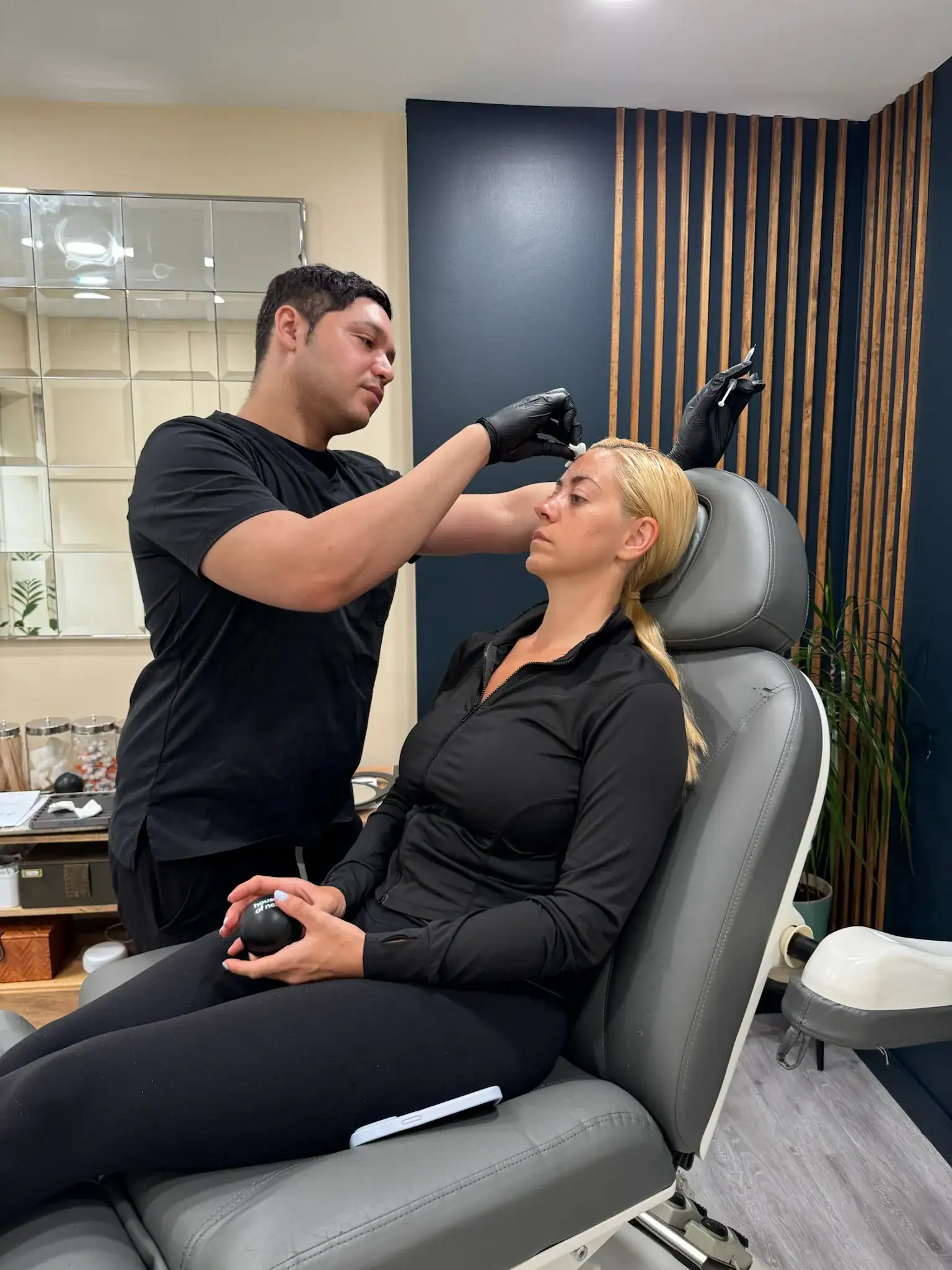
Why Physician Oversight and Authentic Allergan Product Matter More Than You Think
There’s a version of “physician oversight” that means a doctor is technically on file somewhere and signs off on protocols from a distance. And then there’s the version where a Board Certified Plastic Surgeon is actually leading the practice — someone whose entire training was built around facial anatomy, surgical precision, and patient safety.
Those are not the same thing, and the difference shows in the results.
We lead our practice with a Board Certified Plastic Surgeon. That credential doesn’t come from a weekend certification course. It reflects years of specialized training in the structures of the face — the muscles, the fat pads, the nerves, the way everything shifts with age and movement. When that level of knowledge informs our injection protocols and the training of every provider on our team, the standard of care is fundamentally different from a practice where oversight is mostly administrative.
On the product side: we’re a Platinum-level Allergan partner, which is the highest tier Allergan awards. That means every Botox injection we administer uses authentic, FDA-approved BOTOX® Cosmetic — not diluted, not gray-market, not counterfeit. Platinum status also gives our team access to advanced Allergan training that lower-tier providers simply don’t receive. And as a verified Allergan partner, we participate in the Allē rewards program, so our clients earn points on qualifying treatments and can redeem them for savings on future visits.
We also match each client with the right provider for their specific goals and anatomy — not just whoever is available that day. Our team has diverse expertise across different treatment areas and patient profiles, and that matching process is part of how we consistently deliver results that feel right for each individual face.
What the Botox Experience at Our Manhattan, Staten Island, and Paramus Locations Actually Looks Like
Every client starts with a complimentary consultation. No obligation, no pressure to book on the spot. The goal of that conversation is to understand what you’re hoping to achieve, look at your face carefully, and explain what’s realistic — including what we’d recommend and why. If you’re not ready, that’s fine. The consultation exists to serve you, not to close a sale.
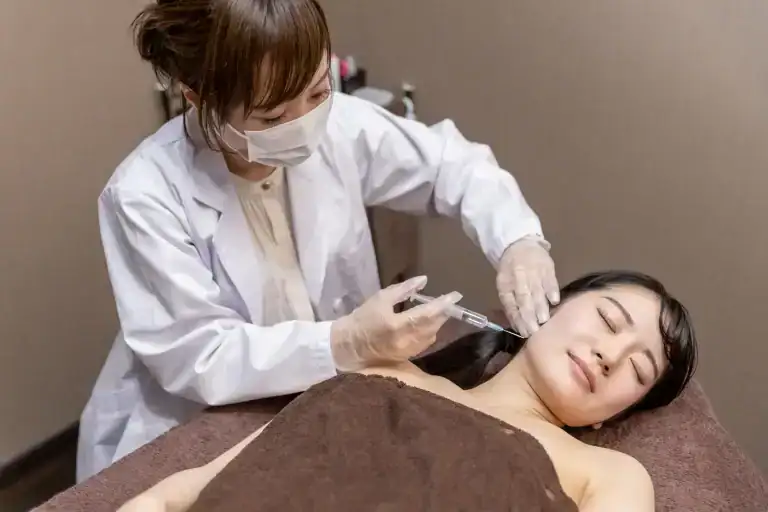
If you decide to move forward, the treatment itself is straightforward. Most Botox appointments take 15 to 30 minutes. Discomfort is minimal — most clients describe it as a small pinch, and many say it was far less than they expected. Clients at our Staten Island location specifically mention this: reviews cite it as “by far the most painless Botox application” they’d had, and several note they didn’t bruise at all.
Two weeks after your appointment, we bring you back in — included, at no extra cost — to evaluate your results and make any touch-ups needed. This is standard for every client, not an upsell. Full Botox results take about 10 to 14 days to settle, which is exactly why the two-week mark is the right time to assess and refine. Most practices end the relationship when you walk out the door. We consider that appointment part of the treatment.
Our three locations each serve a distinct community. Our Upper East Side location in Manhattan sits in one of the most aesthetics-conscious neighborhoods in the country — clients here tend to be experienced, discerning, and very clear on what natural results should look like. Our Staten Island location serves a borough that has historically had to travel to Manhattan for this level of care. We hear it often: people are relieved to find a practice that delivers the same standard without the commute. And our Paramus location draws clients from throughout Bergen County — Ridgewood, Hackensack, Fort Lee, and beyond — who want Manhattan-caliber results without crossing into the city.
Transparent pricing, minimal wait times, and medical-grade skincare guidance to protect your results between appointments are consistent across all three. So is the approach: personalized, honest, and focused entirely on what looks right for your face.
Ready for Botox Results That Actually Look Like You?
The frozen face isn’t inevitable. It’s the result of too much product, wrong placement, and a provider who wasn’t paying close enough attention to your face specifically. When the technique is right, Botox doesn’t announce itself. You just look like a well-rested version of yourself.
If you’re in Manhattan, Staten Island, or Paramus and you’ve been sitting on this decision, the clearest next step is a conversation — not a commitment. A good consultation answers your questions, sets realistic expectations, and gives you enough information to decide confidently.
We’re here when you’re ready. Reach out to schedule your complimentary consultation at the location most convenient to you.
Article details:
- Published by:
- House of Ness
- Published to:
- Last modified:
- July 1, 2026
Share:
Continue learning: